Welcome to TU Cookbooks

A platform to explore research workflows, datasets, and practical guides across TU Wien.

QM from Scratch

Research Unit Theoretical Chemistry

QM from Scratch

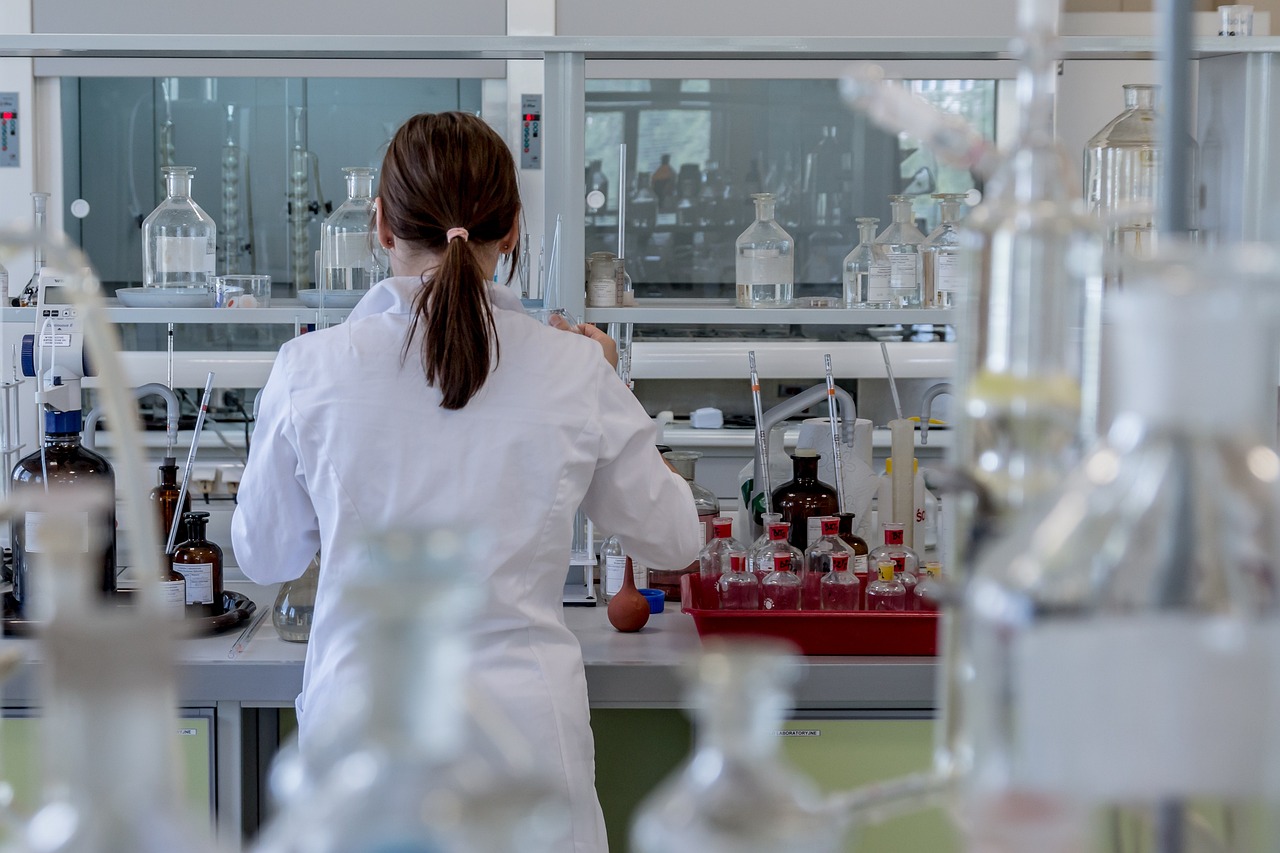
Quantum mechanics from scratch: Implement your own numeric solvers for wavefunctions in one dimension, for the wavefunctions of a hydrogen atom, as well as simple diatomic systems with your own Hartree-Fock solver.
quantum mechanicschemistrywavefunctionChemistry
Drought Monitoring

Research Unit of Remote Sensing

Drought Monitoring

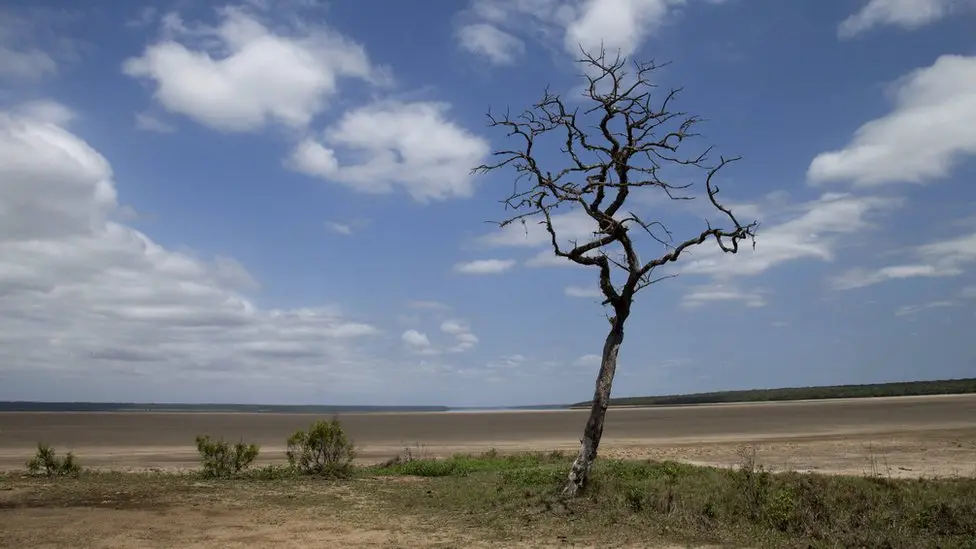
This TU Cookbook covers microwave remote sensing for drought monitoring. Microwave sensors penetrate soils to retrieve soil moisture data. Microwave records from EUMETSAT scatterometers (H SAF ASCAT) on Metop satellites can be used to derive long soil moisture timeseries (2007 to recent). This provides a climatic baseline for dry spell comparison. Applications are particularly valuable for agriculture and crop planning.

Drought MonitoringEarly WarningRemote SensingFood SecurityDisaster Management
AI in Chemistry

Research Unit Theoretical Chemistry

AI in Chemistry

This course teaches you how modern artificial intelligence (AI) and machine learning (ML) methods are used to analyze, predict, and design chemical systems.

artificial intelligencechemistryproperty prediction

TU Cookbooks Gallery

Learn Real-World Data and AI Skills. From Code to Discovery.
LLM-as-a-Service
Campus IT dataLAB
LLM-as-a-Service
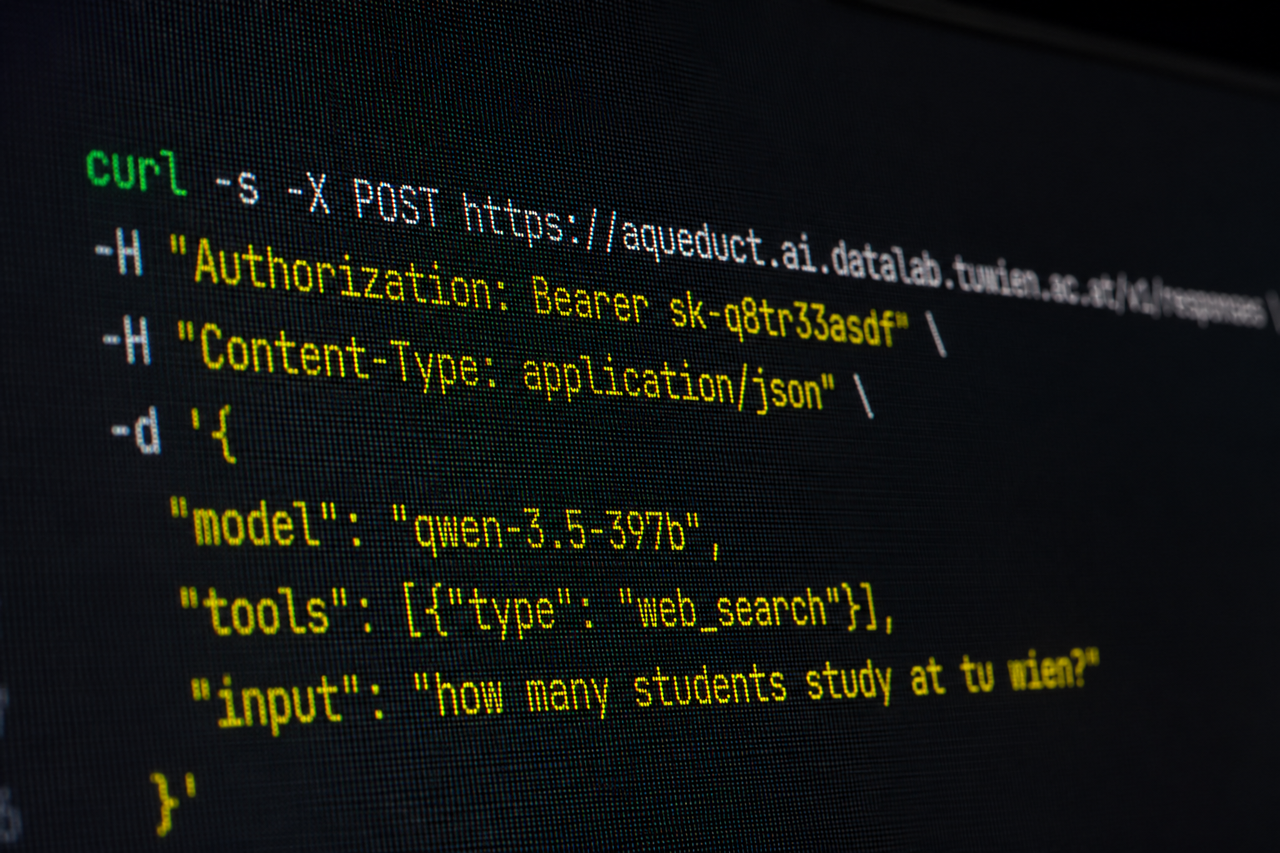
This cookbook aims to provide helpful guides to use "LLM-as-a-Service". We deploy AI models that can be easily accessed through an OpenAI-compatible API.
Large Language ModelsArtificial IntelligenceAPI
Surface Science Tools
Applied Physics
Surface Science Tools
This cookbook provides practical, reproducible analysis workflows for surface science and interface science. It is built around executable notebooks that combine physical background, method-specific analysis steps, transparent Python code, and publication-ready visualization. The first part focuses on core surface and interface methods: XPS, LEIS, AES, and electrochemistry. The XPS notebooks cover energy calibration, background subtraction, peak fitting, chemical-state assignment, spin-orbit splitting, and quantitative composition analysis. LEIS notebooks focus on elemental identification, extreme surface sensitivity, peak integration, matrix effects, and top-layer composition. AES notebooks introduce derivative spectra, peak-to-peak intensities, sensitivity factors, and depth-profile interpretation. Electrochemistry notebooks cover cyclic voltammetry, baseline correction, charge integration, Tafel analysis, impedance concepts, and the connection between current, potential, surface coverage, and reaction mechanism. Across all notebooks, the emphasis is on surface-science reasoning: distinguishing instrumental effects from chemical information, understanding what is surface-sensitive and what is bulk-sensitive, checking calibration and referencing choices, and making clear what can and cannot be concluded from a given dataset.
Surface ScienceInterface ScienceXPSLEISAESElectrochemistryElectrochemical Impedance SpectroscopyEISImpedance AnalysisEquivalent Circuit ModelingCyclic VoltammetrySpectral AnalysisPeak FittingSurface CompositionChemical State AnalysisQuantitative Surface Analysis
BIM & Point Cloud Intelligence
Digital Architecture and Planning
BIM & Point Cloud Intelligence
This cookbook covers the two dominant data formats of the contemporary built environment: IFC-based building information models and LiDAR point clouds. It opens by explaining IFC as a typed-entity graph rather than a file format — a framing that immediately makes the structure legible — and then uses ifcopenshell to extract rooms, areas, and storey assignments from real BIM data. The comparison notebook automates what is currently a manual and error-prone process: pulling net floor areas from the model and checking them against the values in the building permit document, flagging every discrepancy. The point cloud half introduces laspy for loading LiDAR data, implements RANSAC plane detection from scratch to find walls and ceilings in noisy scan data, and demonstrates horizontal section cuts at arbitrary heights. The capstone chains the entire pipeline into a single automated compliance report with dashboard visualisation — a deliverable that a building authority could receive directly.
BIMPoint CloudsIFCArchitecture
Grundlagen Der Messunsicherheit für Chemiker
Institute of Chemical Technologies and Analytics
Grundlagen Der Messunsicherheit für Chemiker
Eine Einführung in Messunsicherheit für die chemischen Grundpraktika mit Praxisbeispielen.
MessunsicherheitFehlerfortpflanzungAnalytische ChemieQuantitative Analytik
Microwave Remote Sensing
Research Unit of Remote Sensing
Microwave Remote Sensing
This cookbook accompanies the TU Wien MSc course "Microwave Remote Sensing Exercises". In this course students learn to read, visualize and analyze Synthetic Aperture Radar (SAR) data. This will aid interpretation of SAR data based upon a physical understanding of sensing principles and the interaction of microwaves with natural objects.
remote sensingmicrowave
Photothermal Nanoscale Chemical Imaging
Faculty of Technical Chemistry
Photothermal Nanoscale Chemical Imaging
Python algorithms, tools and best practices for working with photothermal atomic force microscopy infrared datasets.
AFM-IRinfrarednanoscalespectroscopyatomic force microscopyphotothermal
Molecular Dynamics Simulation
Research Unit Theoretical Chemistry
Molecular Dynamics Simulation
This notebook introduces the concept of molecular dynamics simulations as used in chemistry from scratch.
molecular dynamicssimulationmodelingChemistry